Austin, TX
August 2026
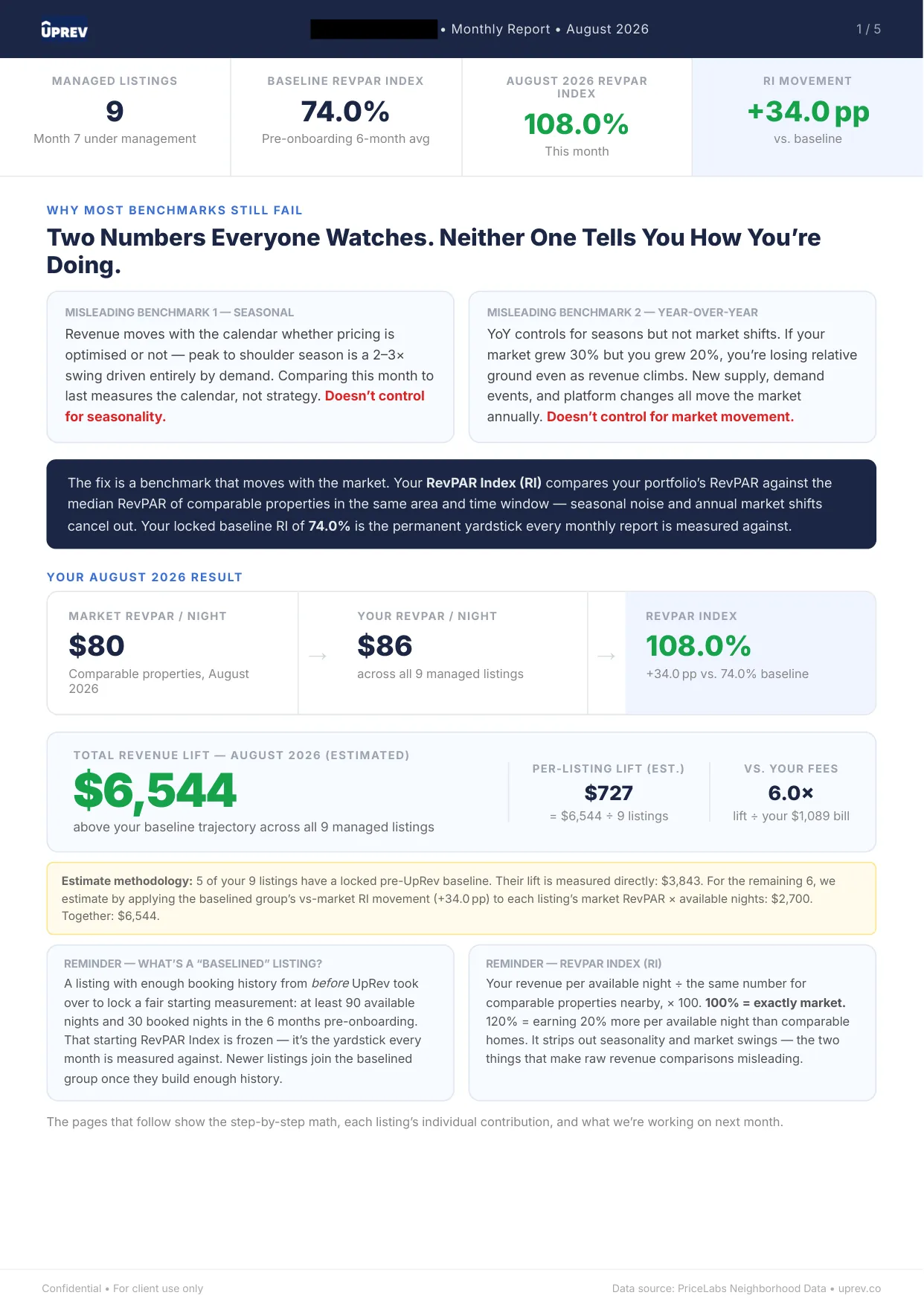
+34 pts
above baseline
5
baselined listings
6.0x
our fee, covered

Austin has been the cautionary tale of American short-term rentals for several years: supply grew faster than demand, and hosts who priced off habit watched revenue erode even in packed festival weeks. Three Austin reports are published on our proof page, and each tells a different version of making money in an oversupplied city.
When a market is short on supply, almost any pricing works. Austin is the opposite: the same downtown weekend can be sold out for one host and empty for another, purely on positioning. Festival and event weeks still create windfalls, but only for listings priced into them early, and the quiet stretches between events punish anyone still holding peak-week rates.
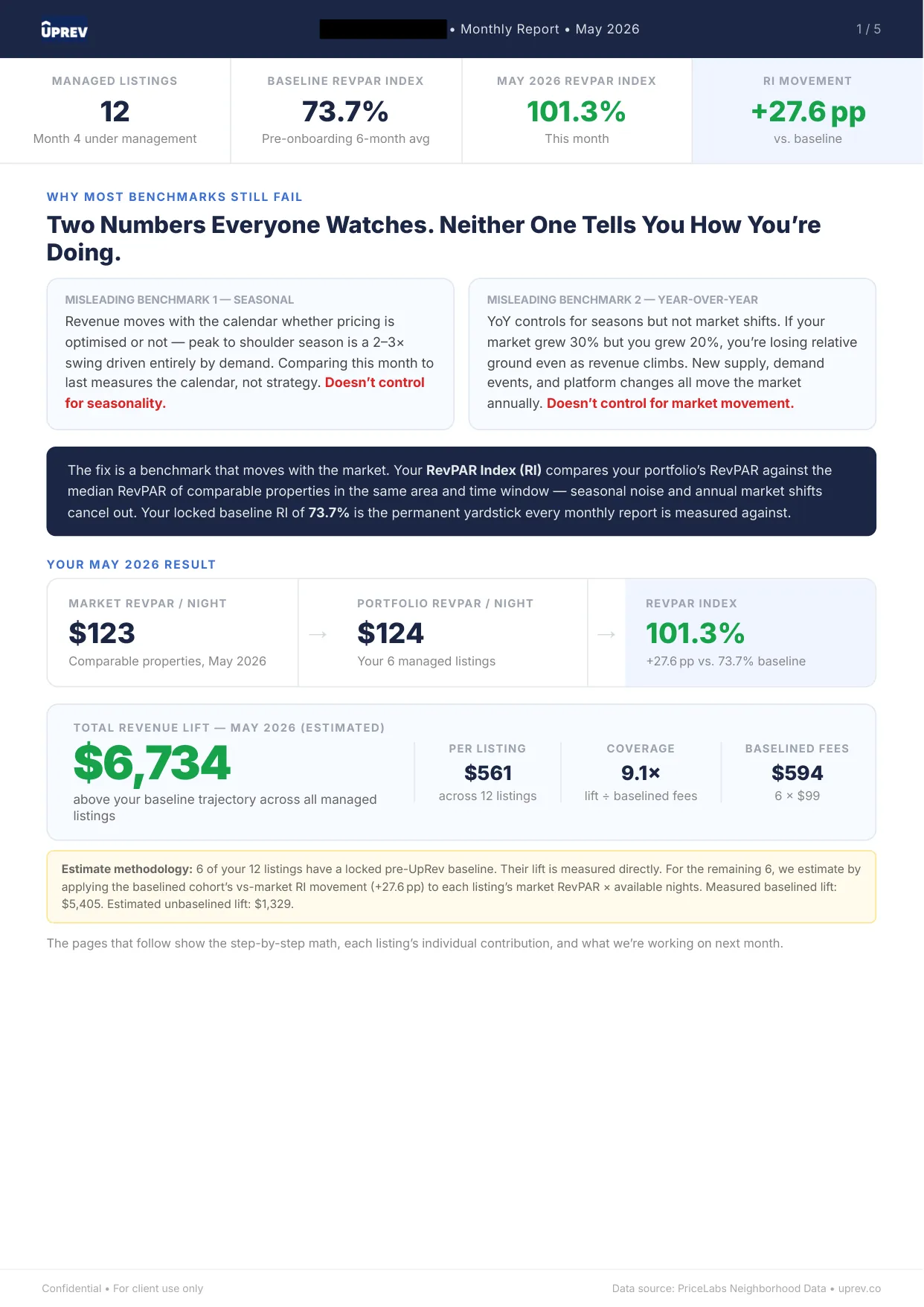
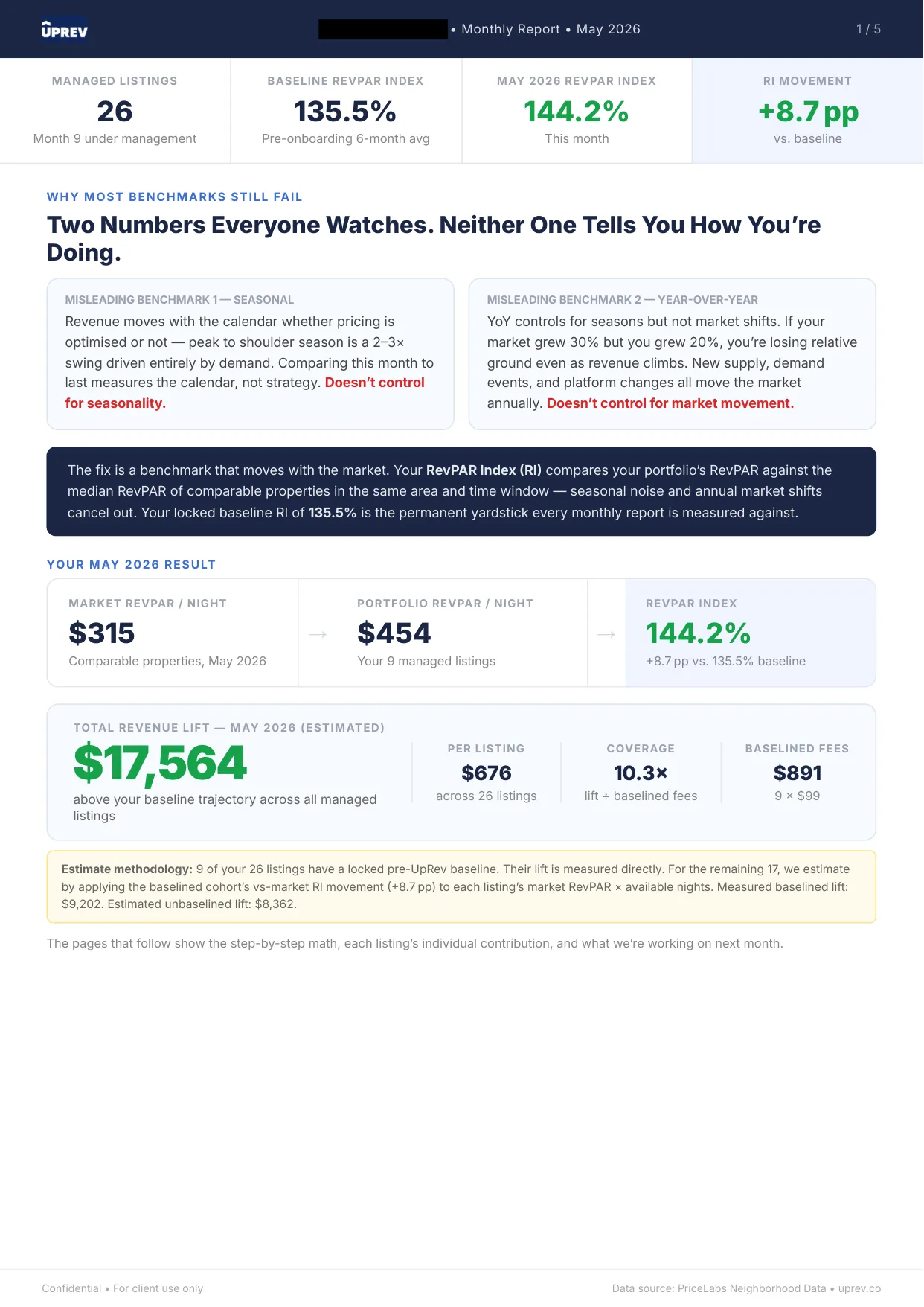
The three reports below cover managed Austin books that entered at different starting points, and they show different shapes of progress: one built its gains gradually, another moved sharply. All three are measured the same way, against the market score frozen for each listing on its first day.
It is usually some version of: can pricing alone still move the needle here, or is the market simply done? The published reports are our answer. Movement above a frozen baseline in a flat or falling market is revenue that operational effort alone does not produce, and it is visible in the documents below rather than asserted.
Company names, owner names and addresses are redacted; every figure is untouched. Full-size viewer on the proof page. How the baseline works: the frozen baseline method.
The first step is a free revenue map built from your own numbers: where each listing sits against the homes it actually competes with, and what that gap is worth. No commitment, and the map is yours to keep either way.